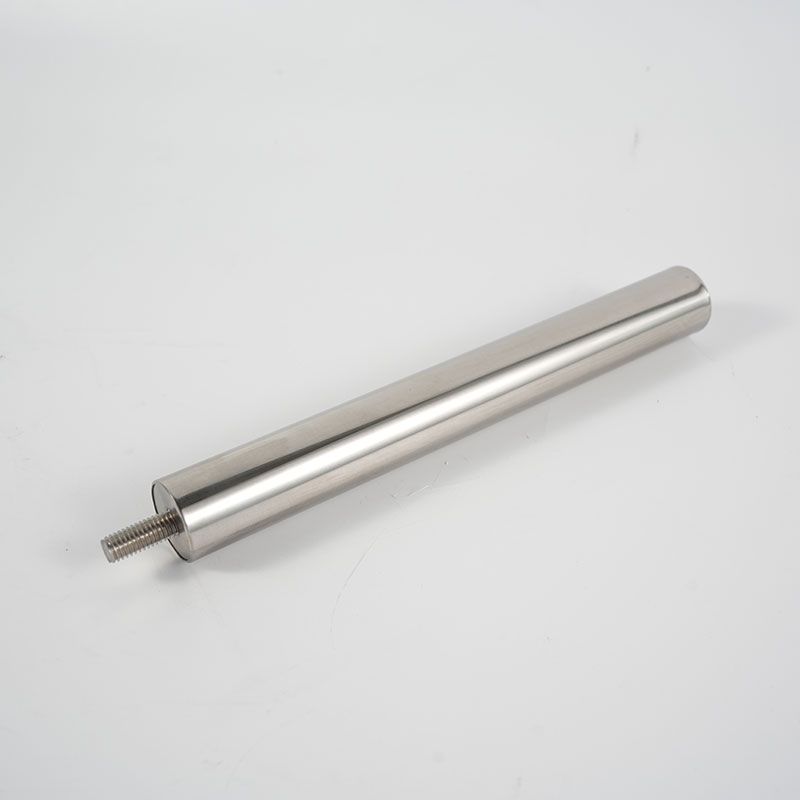
Magnetic rods and bars for separation are available in a wide range of configurations to meet different industrial processing requirements, including round magnetic rods, square magnetic bars, and customized designs for specific equipment integration. They are typically manufactured by assembling sintered neodymium iron boron (NdFeB) magnets into a sealed stainless steel tube to form a high-intensity magnetic core.
The stainless steel tube thickness is typically 1.5–2.5 mm, with surface magnetic strength ranging from 6000 to 12000 Gauss and a protection rating up to IP65. These magnetic rods can effectively capture ferromagnetic impurities from powders, granules, and liquids. Optimized magnetic circuit design creates a strong gradient magnetic field, significantly improving iron removal efficiency.
Application Areas
Food Processing: Magnetic rods made with NdFeB magnets comply with food-grade material requirements and are widely used to remove metallic contaminants from flour, grains, and other bulk materials, preventing product contamination and protecting downstream equipment such as grinders and packaging systems.
Pharmaceutical Industry: These magnetic rods are used to remove fine ferromagnetic particles during powder processing, ensuring product purity and compliance with GMP standards.
Chemical Industry: Commonly applied in plastic granulation and rubber processing, magnetic rods help remove iron contaminants from raw materials, protecting injection molding equipment and improving product quality.
In addition, magnetic rods and bars are widely used in mining, new energy, and construction materials processing.
Technical parameters
Standard magnetic rods typically provide a surface magnetic strength of 8000–12000 Gauss, with a magnetic force decay rate of less than 5% per year. A 50 mm diameter rod can reach up to 12000 Gauss, depending on magnet grade, structure, and tube thickness. Higher intensity models can achieve up to 14000 Gauss for demanding separation applications.
In material processing systems, magnetic rods are often installed in magnetic grates or frames. Typical system capacity ranges from 1–10 tons per hour, depending on equipment design and material flow characteristics. The spacing between rods is generally designed at 1.2–1.5 times the rod diameter to ensure optimal material contact with the magnetic field.
Installation and Maintenance
Magnetic rods are typically sealed at both ends and can be customized with M8–M16 threaded holes or lifting rings, allowing flexible horizontal or vertical installation in separation systems.
During cleaning, non-ferrous tools should be used, and protective gloves are recommended to prevent injury caused by strong magnetic force. It is recommended to check magnetic strength every 6–12 months using a Gauss meter. If magnetic strength decreases by more than 15%, the magnetic core should be replaced to maintain optimal performance.
Not sure which shape fits your pipeline? Check out our professional guide on [How to choose magnetic rod shapes].