Aizolo: The All-in-One AI Platform That Brings the World's Leading AI Models Together
Artificial intelligence has become an essential part of modern work. From content creation and software development to research, marketing, customer support, business strategy, and education, AI tools are transforming how people solve problems and accomplish tasks. However, as the AI ecosystem continues to expand, users face a growing challenge: choosing the right AI model for every task while managing multiple subscriptions, platforms, interfaces, and workflows.
Today's AI landscape is fragmented. One model may excel at writing high-quality content, while another performs better at reasoning, coding, data analysis, image generation, or research. Professionals, businesses, students, creators, and developers often find themselves switching between multiple AI tools throughout the day. This process creates unnecessary complexity, increases costs, and disrupts productivity.
Aizolo was created to solve this problem.
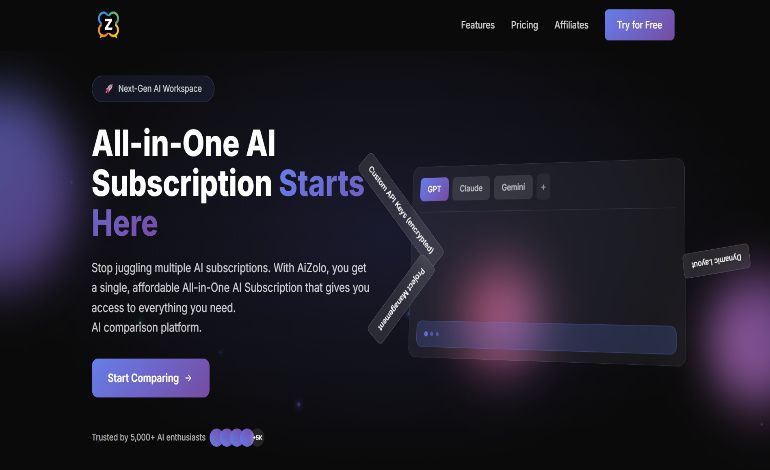
Aizolo is an all-in-one AI platform designed to give users access to multiple leading AI models through a single, unified workspace. Instead of paying for and managing several AI subscriptions separately, users can access powerful AI capabilities from one platform, one dashboard, and one streamlined workflow.
The vision behind Aizolo is simple: artificial intelligence should be accessible, flexible, affordable, and efficient. Users should not have to choose a single AI model and accept its limitations. They should be able to leverage the strengths of multiple AI systems without switching tabs, losing context, or maintaining multiple accounts.
The Problem Aizolo Solves
The rapid growth of artificial intelligence has created incredible opportunities, but it has also introduced new challenges.
Many professionals now use several AI tools simultaneously. A content marketer might use one model for brainstorming blog topics, another for SEO optimization, and a third for editing final drafts. A software developer may prefer one AI model for code generation, another for debugging, and a third for technical documentation. Researchers often compare responses from multiple models to gain deeper insights and reduce bias.