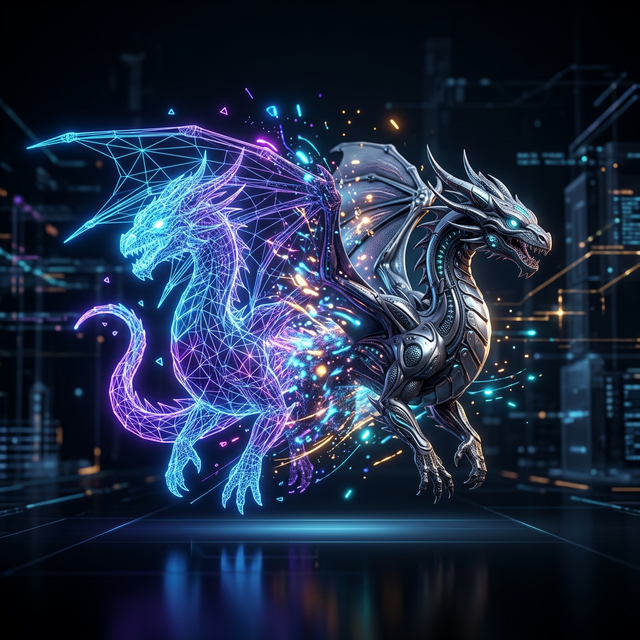
Trellis 2 is an advanced AI-powered platform designed to transform 2D images into high-quality, production-ready 3D models. Leveraging its cutting-edge Structured Latents (SLAT) engine, pre-trained on 2 billion parameters, Trellis 2 excels at reconstructing industrial-standard sparse geometry and high-fidelity textures. This innovative technology ensures true productivity for demanding game and film pipelines, providing a significant advantage over other AI tools that often produce less refined "blobs."
The core strength of Trellis 2 lies in its ability to generate 3D assets with professional-grade characteristics. Users can expect:
- Production Topology: Models feature clean, quad-based topology, making them ideal for further animation, editing, and integration into complex scenes. This ensures compatibility and ease of use within professional 3D workflows.
- Efficient UV Unwrapping: The platform provides efficient UV unwrapping with minimal distortion, simplifying the texturing process and ensuring textures map correctly and cleanly onto the 3D mesh.
- High-Resolution 4K Textures: Trellis 2 bakes appearance into textures using 3D Gaussians, delivering high-fidelity PBR (Physically Based Rendering) material maps. These include Albedo (Color), Normal, and Roughness maps, which are crucial for achieving realistic physical rendering in various environments.
- Standard Exports: All generated models are exported in the industry-standard GLB (glTF) format. This ensures broad compatibility with popular 3D software and game engines such as Blender, Unity, Unreal Engine 5, and Three.js, facilitating seamless integration into existing projects.
- Commercial Use: Paid users (via Credit Packs or VIP Subscription) are granted commercial use rights for their generated models, making Trellis 2 a viable solution for professional projects.
- Suitability for 3D Printing: The platform often generates watertight meshes with clean topology, making the models suitable for 3D printing. Users can convert the GLB files to formats like STL or OBJ using tools like Blender for printing purposes.
To achieve optimal results, Trellis 2 recommends using high-resolution input images with clear lighting and minimal occlusion. Front-facing or isometric views tend to yield the most accurate geometry and texture reconstruction, although the SLAT technology is robust enough to handle a variety of inputs. Trellis 2 empowers creators to instantly turn their imagination into tangible, production-ready 3D assets, streamlining workflows and enhancing creative possibilities.