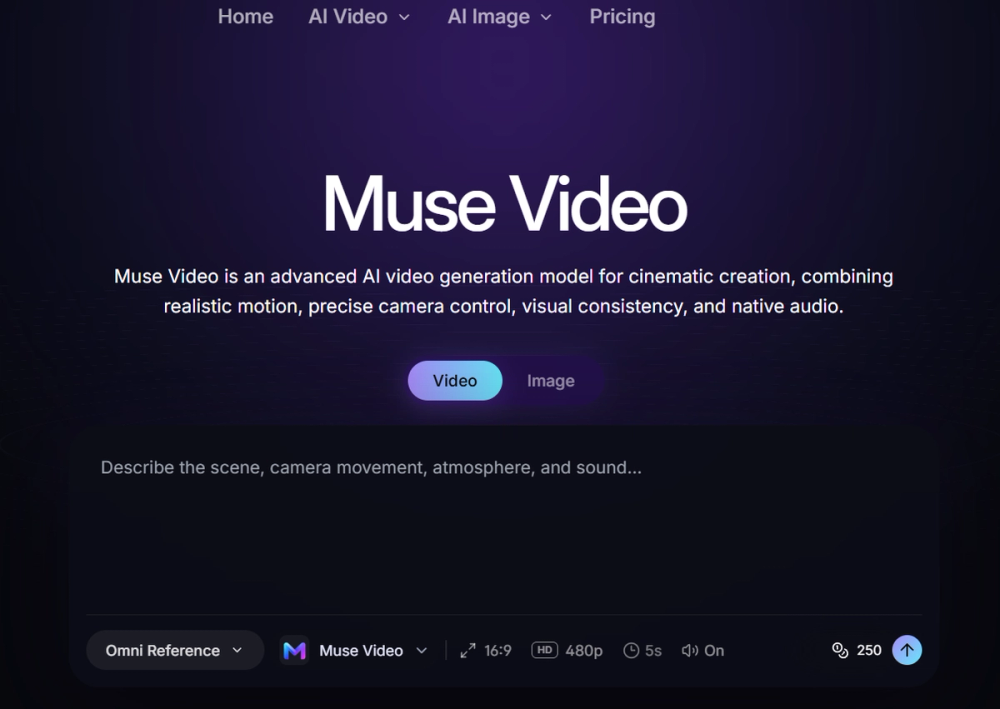
Muse Video is an advanced AI video generation model designed for cinematic creation, enabling users to transform detailed text prompts and reference images into dynamic, high-quality videos. Developed by Meta Superintelligence Labs, it emphasizes prompt adherence, visual fidelity, and temporal consistency, ensuring subjects and scenes remain coherent throughout the video.
Key Features:
- Text-to-video generation: Describe subjects, actions, settings, and camera direction in natural language to create moving visual concepts.
- Image-to-video workflow: Guide motion using a reference image, ideal for maintaining specific compositions or product details.
- Temporally consistent motion: Ensures visual coherence across frames, a core focus highlighted by Meta.
- Cinematic camera control: Utilize prompt language to define framing, tracking, handheld movement, pacing, lighting, and atmosphere.
- Native audio direction: Generate aligned audio and picture from the same creative instruction, with ongoing improvements in synchronization.
- Prompt and visual fidelity: The model closely follows requested scenes, preserving detail and consistent visual direction.
- Flexible generation settings: Customize aspect ratio, duration, resolution, and audio options based on the selected model.
- Reusable creation library: Organize prompts and generated assets for repeatable creative workflows.
How to Use Muse Video:
- Enter a Prompt: Describe your video idea, including subject, scene, visual style, motion, camera direction, sound, and intended duration.
- Generate the Video: Review editable directions and reference images, select the model and settings, then initiate the generation.
- Review and Export: Evaluate motion and reference consistency, then export the best result for various applications.
Who Should Use Muse Video:
- Content creators: Produce short-form social videos, visual stories, and repeatable concepts efficiently.
- Marketers: Generate multiple promotional directions from a single brief, comparing concepts before committing production budgets.
- Filmmakers: Explore staging, lenses, camera movement, atmosphere, and story beats during previsualization, storyboarding, and pitching phases.
- Designers: Add movement to static visual concepts and test how layouts, characters, or product compositions evolve over time.
- Brands: Create product-focused clips and branded visual variations for launches, landing pages, and social campaigns.
- Creative teams: Rapidly prototype diverse directions, share moving references, and achieve alignment on ideas before large-scale production.
Muse Video aims to empower creators to explore ideas earlier, generate more variations, and communicate motion effectively without the need for traditional production methods.